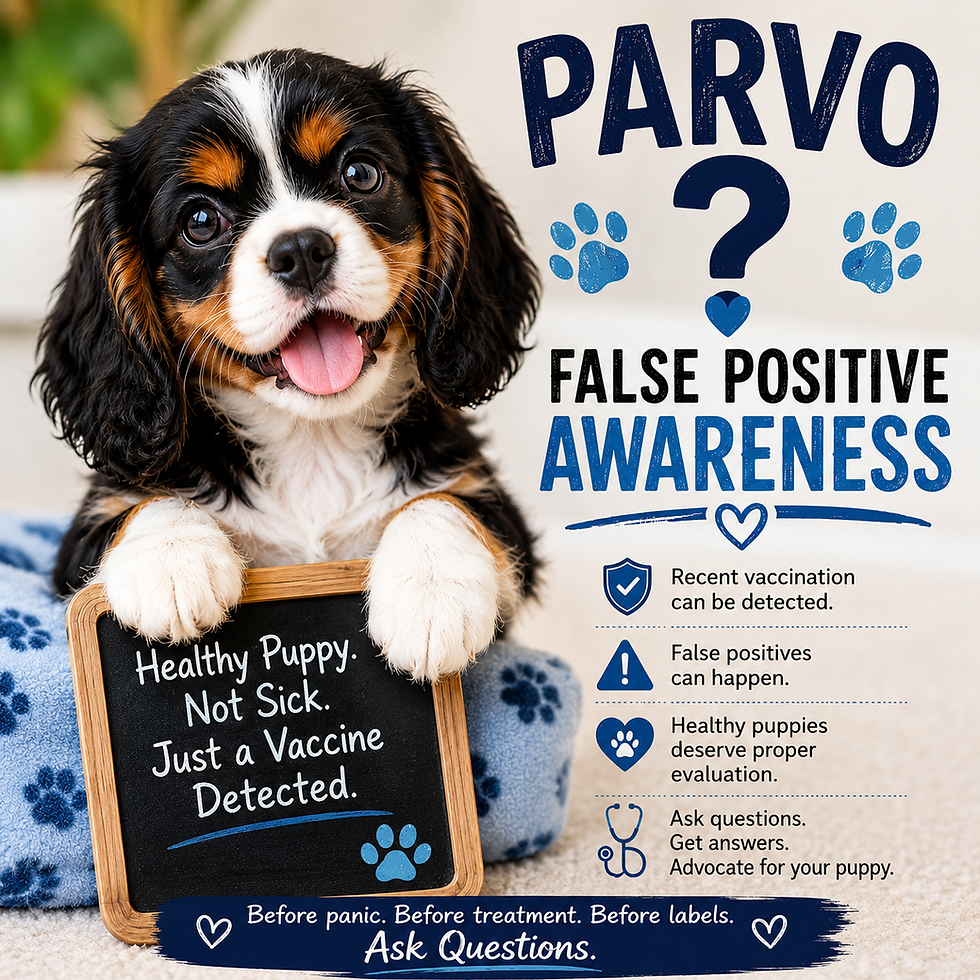
The Veterinary Stories Nobody Wants to Talk About - Veterinarian Malpractice

There are things some breeders stay quiet about because speaking up can upset the wrong people. Some people reading this article may strongly disagree with me. Others — including veterinarians themselves — may quietly agree.
The truth is, I actually wanted to write this article almost 10 years ago. Over the years, I was repeatedly advised not to speak publicly about these experiences. I was told it could create problems, upset people, damage relationships, or bring backlash. So I stayed quiet.
But after everything I have personally witnessed over the years, I finally feel ready to speak up.
Not to attack every veterinarian. Not to spread fear. And not because I believe all veterinarians are bad — because that would simply not be true. I know incredible veterinarians who are honest, compassionate, and genuinely dedicated to saving animals every single day.
But I also believe families deserve transparency. I believe pet owners deserve to ask questions. And I believe animals deserve advocates when something does not feel right.
This article is about sharing experiences, concerns, and situations that I personally witnessed or heard directly from families and veterinary professionals over the years. Some stories are heartbreaking. Some are difficult to believe. But all of them left lasting impressions on me. These are just a few I picked from docents of stories.
I am speaking up for the families who felt helpless. I am speaking up for the pet owners who felt pressured, confused, or ignored. And most importantly, I am speaking up for the animals who cannot speak for themselves.
Over 46 years my family is working with puppies and speaking with pet owners, I have personally seen situations that raised serious concerns. Some veterinarians seem more focused on profits than on finding the fastest, safest, and most affordable solution for the animal. Families walking confused into veterinary clinics with unwell dogs or puppies are emotional, vulnerable, and often willing to do anything to save their pet. Unfortunately, in rare cases, that vulnerability can be taken advantage of.

One issue I have repeatedly noticed involves respiratory infections and coughing puppies and dogs. In my personal experience, some veterinarians continue prescribing medications like Clavamox or amoxicillin for kennel cough-type symptoms even when improvement is limited or nonexistent. In many situations I have observed, puppies either failed to improve or became worse over time, leading families into repeated visits, more tests, more x-rays, and growing veterinary bills.
Of course, every dog and every medical situation is different. But it raises an important question: Are some puppies or dogs being treated symptom-by-symptom instead of receiving the most effective treatment approach from the beginning?
The financial impact on families can become enormous. Follow-up appointments, imaging, medications, testing, hospitalization — these costs add up quickly, especially when the puppy continues struggling without improvement.
Another example involves parasites such as Giardia. Honest veterinarians will explain that parasites in puppies are not uncommon and are often easy treatable. However, I have seen cases where owners were repeatedly sold medications treating only the symptoms — such as diarrhea — while the actual parasite itself was not addressed. Families would temporarily think the puppy improved, only for symptoms to return days later, resulting in more appointments over multiple month, and additional expenses.
Again, this is not an attack on veterinary medicine. It is a call for transparency, second opinions, and informed pet ownership.
One particularly shocking story came from a veterinary technician I personally know and trust. According to her, a family had been told by another clinic that their dog urgently needed surgery for a suspicious “growth” visible on x-rays. The owners were devastated and terrified.
Wanting a second opinion, they brought the x-rays to another clinic. New x-rays were taken — and suddenly the “growth” was gone. The explanation, according to the technician, was that an object placed beneath the dog may have created the suspicious image on the original scan.
Stories like this are deeply disturbing. And while I cannot claim every detail can be proven, the fact that such concerns exist at all should make people ask more questions before agreeing to expensive procedures or life-changing medical decisions.
The reality is simple: Pet owners should never feel ashamed for asking questions. They should never feel pressured into immediate treatments without understanding the diagnosis. And they should never be afraid to seek a second or even third opinion.
Veterinary medicine is incredibly important, and there are wonderful veterinarians saving lives every day. But accountability, honesty, and ethical treatment matter too.
At the end of the day, our pets cannot speak for themselves. So we must.

Another heartbreaking story involved a dog that was originally completely healthy. After what was supposed to be a routine veterinary visit, the dog short later developed a cough. According to the family involved, the veterinarian prescribed Clavamox.
Unfortunately, the dog did not improve and instead became worse over the following days.
The family returned to the clinic, hoping for a different approach or further investigation. However, another round of the same medication was prescribed. Again, the dog’s condition continued declining.
What made the situation even more confusing to the owners was that during multiple visits, the dog repeatedly received IV fluids and anti-nausea medications — despite reportedly never vomiting, showing dehydration, or displaying signs of nausea at that stage.
As the cough continued getting worse, the veterinarian prescribed another medication — this time a medication more commonly used for staph infections rather than for respiratory infections. The treatment did not make sense to the family, especially because the dog’s main issue was still the severe cough and worsening respiratory symptoms. However, trusting the veterinarian’s judgment, they gave the medication to the dog anyway.
According to the family, shortly after starting the medication, the dog began experiencing severe side effects, including nausea and vomiting. They strongly believed the medication was simply too strong and was not appropriate for what the dog was actually suffering from. Instead of helping, the puppy’s condition reportedly became even worse, creating more fear, stress, and desperation for the family as they watched their dog continue declining.
By the fourth visit, the dog was diagnosed with aspiration pneumonia — a very serious condition where material enters the lungs, causing severe inflammation and infection. By that point, the dog had reportedly become extremely sick, constant vomiting and aspirating.
The family was devastated when they were sent home once again with Clavamox instead of pursuing more aggressive emergency care or hospitalization.
Tragically, the dog passed away the same evening.
What made the situation even more painful and confusing for the family was the reported final explanation regarding the dog’s death. According to this veterinarian, they were told the cause was related to a genetic heart failure (!) — despite the dog reportedly never showing prior signs of heart disease, heart murmurs, collapsing episodes, exercise intolerance, breathing-related heart symptoms, or any previously diagnosed cardiac condition before the aspiration pneumonia.
The family especially struggled with this explanation because aspiration pneumonia itself is known to place enormous stress on the body, particularly on the lungs, oxygen levels, and cardiovascular system. Severe respiratory distress can reduce oxygen circulation throughout the body, force the heart to work significantly harder, increase inflammation, and in critical situations may contribute to secondary cardiac complications, weakness, or cardiovascular collapse.
Aspiration pneumonia is considered a serious and potentially life-threatening emergency because once fluid, vomit, or foreign material enters the lungs, oxygen exchange becomes impaired. Dogs can rapidly deteriorate if aggressive respiratory support, monitoring, oxygen therapy, and proper treatment are not provided quickly enough.
For the family, this raised even more unanswered questions. They could not understand how a dog with no known history of heart disease could suddenly be labeled as having fatal genetic heart failure only after weeks of worsening respiratory complications, medications, vomiting, aspiration pneumonia, repeated veterinary visits, and physical decline.
Whether the final diagnosis was correct, incomplete, or simply misunderstood, the experience left the family devastated and emotionally traumatized.
Could the dog still be alive today if the correct treatment, proper diagnosis, and more aggressive respiratory care had been provided from the very beginning?
It is a question they may never fully have answered — but one that continues to stay with them every single day.
In addition to the heartbreak of losing a beloved pet, they had also spent a five digit amount in veterinary expenses throughout the process while desperately trying to save their dog.

The emotional trauma these stories caused these families was enormous.
Stories like these are why many pet owners become fearful, frustrated, and emotionally conflicted.
Was it negligence?
Was it an honest mistake?
Was the treatment plan simply ineffective?
Those are difficult questions, and without full medical records and independent review, nobody should jump to legal conclusions.
But one thing is certain:
Pet owners deserve the right to ask questions.
They deserve clear explanations. They deserve second opinions without feeling guilty. They deserve honesty and empathy. And they deserve to fully understand why certain medications, treatments, or procedures are being recommended.
Veterinarians are human beings — and like in every profession, some are exceptional, some make mistakes, and some may not always communicate or practice the way they should. Blind trust without asking questions can sometimes lead to devastating outcomes.
That does not mean people should fear all veterinarians. It means pet owners should stay informed, involved, and proactive in their pet’s care.
Research. Ask questions. Learn about medications. Understand possible side effects and alternatives. If your instincts tell you something is wrong, seek another opinion immediately.
Your pet depends on you to be their voice.
Thank you for reading,
World Class Cavaliers
South Florida Shepherds
Jenny Forth, Karin Gampe and Josef Schwab
(Since 1980! Three generation in the dog breeding Business)